Does My Teenager Need to File a Tax Return?
Many parents are reviewing W-2s for the first time with their teenagers and asking a practical question: Does my child need to file a tax return? For kids who worked part-time or seasonal jobs last year, the answer often depends on how much they earned and whether taxes were withheld. Even when a filing is not required, it may still make sense to submit a return.

Disclaimer: This is for informational purposes only. Do not make any tax decisions on your own. Please consult with your tax professional or financial professional before making changes
Key Takeaways
Many children who earned less than the federal standard deduction will not owe federal income tax
If federal or state taxes were withheld, filing a return may be necessary to receive a refund
When starting a job, students may be able to claim exempt from withholding if earnings are expected to stay below the threshold
Earned income creates eligibility for a Roth IRA, which can be a meaningful long-term planning opportunity
State filing requirements often differ from federal rules and may have lower thresholds
1. Federal Filing Basics for Children
For 2025, the federal standard deduction for a single filer is 15,750 of earned income.
If your child’s total earned income from a part-time or seasonal job was below that amount and there are no complicating factors, they generally will not owe federal income tax and may not be required to file.
That said, filing requirements can change if your child has:
Unearned income such as dividends or investment gains
Self-employment income
Other unique tax situations
In most typical high school job scenarios, the issue is not whether tax is owed. The issue is whether money was withheld.
2. Review the W-2: Was Anything Withheld?

Many employers withhold federal and state income taxes automatically. They do not adjust withholding based on whether the job is seasonal or part-time.
If your child earned $4,000 or $6,000 and federal income tax was withheld, they likely owe nothing. However, the IRS will not automatically return that money. A tax return must be filed to request a refund.
This is where many families miss an opportunity. Income may be below the filing threshold, but filing could still result in getting several hundred dollars back.
3. Planning Ahead: Claiming Exempt from Withholding
When a student starts a new job and expects earnings to stay below the standard deduction, they may be able to claim exempt from federal income tax withholding on Form W-4.
This can prevent unnecessary withholding during the year and improve take-home pay.
Accuracy is important. If total earnings exceed expectations, taxes may be owed at filing. It is helpful for parents to review the form before submission to ensure it reflects a realistic income estimate.
Helpful Insight 💡: Confirm with your existing tax accountant before making this change.
4. Do Not Miss the Roth IRA Opportunity
One valuable planning conversation that can come from a child’s first job is about the Roth IRA.
As long as your child has earned income, they are eligible to contribute up to the lesser of:
Their total earned income for the year
The annual Roth IRA contribution limit
Money contributed to a Roth IRA grows tax-free, and qualified withdrawals in retirement are tax-free.
When contributions begin in the teenage years, the timeline for compounding can span decades. Even modest amounts can grow meaningfully over time.
At the same time, summer or part-time income should still support spending, saving, and learning how to manage money responsibly. A Roth IRA can complement those lessons.
5. State Filing Requirements May Be Different
States often have lower filing thresholds than the federal government, and some require filing if any state income tax was withheld.
Here is a general reference table:
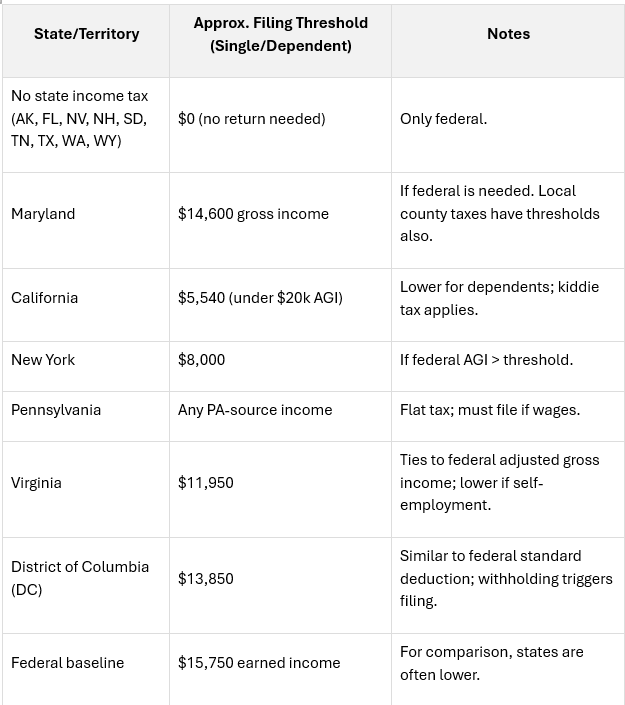
Thresholds are approximate for tax year 2025 and may change annually. Always confirm current state guidance before filing.
Helpful Insight 💡: It may take more time to determine whether you should file a state tax return than simply filing it. The rules are constantly changing, and to be on the safe side and maintain an official record, filing a state return even when you don’t need to file at the federal level is a good practice.
A Practical Tax Season Checklist for Parents
As you review your child’s W-2 this year:
Confirm total earned income.
Check federal and state withholding amounts.
Determine whether filing will generate a refund.
Consider whether a Roth IRA contribution makes sense.
Review state-specific filing requirements.
For many families, a child’s first tax return is more about education than liability.
Knowing when filing is required, when it is beneficial for a refund, and how earned income can open the door to a Roth IRA can help parents guide their children through an important financial milestone.
If you are unsure how your child’s income fits into your broader financial plan, reviewing the numbers before filing deadlines can help avoid missed opportunities.